Frequentieverdelaars
home > producten > Frequentieverdelaars

Frequentieverdelaars

Verbeter de geluidskwaliteit en luidsprekereffiëncy met wereldberoemde dbx-overdragers. Deze overdragereenhedenen leveren uitstekende prestaties, alle functies die u van een professioneel product verwacht, en het vertrouwen dat u een betrouwbare naam koopt die meer dan 25 jaar lang 's werelds beste audio-apparatuur produceert. De technologie die ons beroemd maakte, brengt u een dbx-overdrager die volgens de hoogste professionele normen is getest en jarenlang meegaat.
Frequentieverdelaars Producten

  • 223s

    223s

    Stereo 2-wegs/Mono 3-wegs Crossover
    Ways 2-Way / 3-Way
    Connectors 1/4" TRS
    Max Input +22dBu
    CMRR >40dB
  • 223xs

    223xs

    Stereo 2-weg/Mono 3-weg Crossover met XLR-aansluitingen
    Ways 2-Way / 3-Way
    Connectors XLR
    Max Input +22dBu
    CMRR >40dB
  • 234s

    234s

    Stereo 2/3-weg, Mono 4-weg crossover
    Ways 2/3-Way / 4-Way
    Connectors 1/4" TRS
    Max Input +22dBu
    CMRR >40dB
  • 234xs

    234xs

    Stereo 2/3-weg, Mono 4-weg crossover met XLR-connectoren
    Ways 2/3-Way / 4-Way
    Connectors XLR
    Max Input +22dBu
    CMRR >40dB

  Selecteer 2 tot 6 producten om te vergelijken


Tech Tip

What does a crossover actually do?

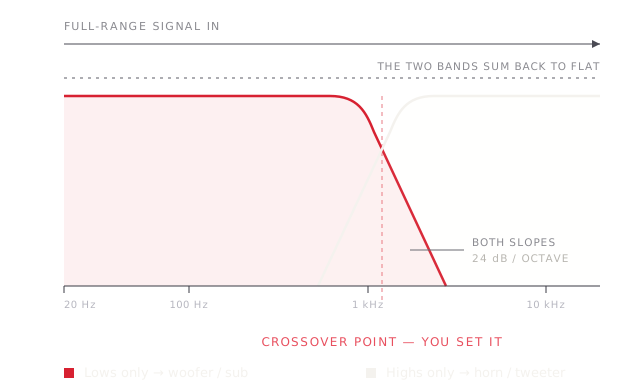
You've probably heard you need one, but here's why. Think of it as a frequency splitter. No single driver reproduces the full frequency range well — a woofer is built for lows, a tweeter for highs, a horn for the mids and highs it's voiced to. A crossover splits the incoming signal and routes each band only to the driver designed to handle it, so nothing works outside its comfort zone. The payoff: cleaner output, more usable headroom, and drivers that aren't straining against something they were never built for.

A full-range signal entering a crossover and splitting into a low-frequency band routed to the woofer and a high-frequency band routed to the horn, the two 24 dB per octave slopes crossing at the crossover point
One signal in, two bands out. Everything below the point you choose goes to the woofer, everything above it to the horn — each rolling off at 24 dB per octave, the dbx standard.