Bộ chia tần số
trang chủ > sản phẩm > Bộ chia tần số

Bộ chia tần số

Cải thiện chất lượng âm thanh và hiệu suất loa với các bộ crossover dbx nổi tiếng thế giới. Những bộ đơn vị crossover này mang lại hiệu suất tuyệt vời, tất cả các tính năng mà bạn mong đợi từ một sản phẩm chuyên nghiệp, cũng như sự tin tưởng rằng bạn đang mua một thương hiệu được tin cậy đã sản xuất những thiết bị âm thanh tốt nhất thế giới trong hơn 25 năm. Công nghệ đã làm nên danh tiếng của chúng tôi mang đến cho bạn một bộ crossover dbx đã được kiểm tra theo các tiêu chuẩn chuyên nghiệp cao nhất và sẽ tồn tại trong nhiều năm.
Bộ chia tần số Sản phẩm

  • 223s

    223s

    Bộ chia tần số âm thanh nổi 2 đường/Mono 3 đường
    Ways 2-Way / 3-Way
    Connectors 1/4" TRS
    Max Input +22dBu
    CMRR >40dB
  • 223xs

    223xs

    Bộ chia tần số Stereo 2-Way/Mono 3-Way với Đầu nối XLR
    Ways 2-Way / 3-Way
    Connectors XLR
    Max Input +22dBu
    CMRR >40dB
  • 234s

    234s

    Bộ chia tần Stereo 2/3 Way, Mono 4-Way
    Ways 2/3-Way / 4-Way
    Connectors 1/4" TRS
    Max Input +22dBu
    CMRR >40dB
  • 234xs

    234xs

    Bộ chia tần Stereo 2/3 đường, Mono 4 đường với Đầu nối XLR
    Ways 2/3-Way / 4-Way
    Connectors XLR
    Max Input +22dBu
    CMRR >40dB

  Chọn 2 đến 6 sản phẩm để so sánh


Tech Tip

What does a crossover actually do?

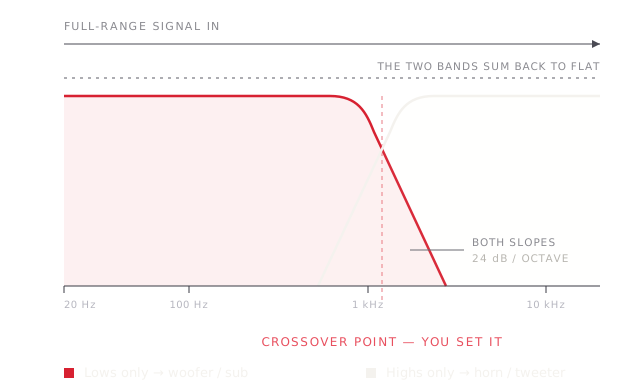
You've probably heard you need one, but here's why. Think of it as a frequency splitter. No single driver reproduces the full frequency range well — a woofer is built for lows, a tweeter for highs, a horn for the mids and highs it's voiced to. A crossover splits the incoming signal and routes each band only to the driver designed to handle it, so nothing works outside its comfort zone. The payoff: cleaner output, more usable headroom, and drivers that aren't straining against something they were never built for.

A full-range signal entering a crossover and splitting into a low-frequency band routed to the woofer and a high-frequency band routed to the horn, the two 24 dB per octave slopes crossing at the crossover point
One signal in, two bands out. Everything below the point you choose goes to the woofer, everything above it to the horn — each rolling off at 24 dB per octave, the dbx standard.