Delningsfilter
hem > produkter > Delningsfilter

Delningsfilter

Förbättra ljudkvaliteten och högtalareffektiviteten med världskända dbx-delningsfilter. Dessa delningsfilter ger utmärkt prestanda, alla funktioner du förväntar dig från en professionell produkt och vetskapen om att du köper ett pålitligt namn som har producerat världens finaste audioutrustning i över 25 år. Den teknik som gjorde oss berömda förser dig med ett dbx-delningsfilter som har testats enligt högsta professionella standarder och som kommer att hålla i många år.
Delningsfilter Produkter

  • 223s

    223s

    Stereo 2-vägs/Mono 3-vägs vägkorsning
    Ways 2-Way / 3-Way
    Connectors 1/4" TRS
    Max Input +22dBu
    CMRR >40dB
  • 223xs

    223xs

    Stereo 2-vägs/Mono 3-vägs korsningsfilter med XLR-kontakter
    Ways 2-Way / 3-Way
    Connectors XLR
    Max Input +22dBu
    CMRR >40dB
  • 234s

    234s

    Stereo 2/3-vägs, Mono 4-vägs crossover
    Ways 2/3-Way / 4-Way
    Connectors 1/4" TRS
    Max Input +22dBu
    CMRR >40dB
  • 234xs

    234xs

    Stereo 2/3-vägs, mono 4-vägs delningsfilter med XLR-kontakter
    Ways 2/3-Way / 4-Way
    Connectors XLR
    Max Input +22dBu
    CMRR >40dB

  Välj 2 till 6 produkter att jämföra


Tech Tip

What does a crossover actually do?

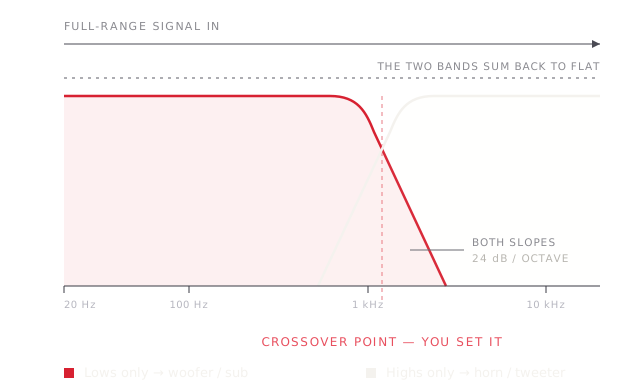
You've probably heard you need one, but here's why. Think of it as a frequency splitter. No single driver reproduces the full frequency range well — a woofer is built for lows, a tweeter for highs, a horn for the mids and highs it's voiced to. A crossover splits the incoming signal and routes each band only to the driver designed to handle it, so nothing works outside its comfort zone. The payoff: cleaner output, more usable headroom, and drivers that aren't straining against something they were never built for.

A full-range signal entering a crossover and splitting into a low-frequency band routed to the woofer and a high-frequency band routed to the horn, the two 24 dB per octave slopes crossing at the crossover point
One signal in, two bands out. Everything below the point you choose goes to the woofer, everything above it to the horn — each rolling off at 24 dB per octave, the dbx standard.