معدلات التقسيم الترددية
الصفحة الرئيسية > المنتجات > معدلات التقسيم الترددية

معدلات التقسيم الترددية

تحسين جودة الصوت وكفاءة مكبّرات الصوت بأجهزة فصل الترددات dbx المشهورة عالميًا. توفر هذه الوحدات الفاصلة أداءً ممتازًا وجميع المميزات التي تتوقعها من منتج احترافي، مع العلم بأنك تختار علامة تجارية موثوقة أنتجت أفضل معدات الصوت في العالم لأكثر من 25 عامًا. التكنولوجيا التي اشتهرنا بها تجلب لك جهاز فصل ترددات dbx تم اختباره وفقًا لأعلى المعايير الاحترافية وسيدوم لسنوات.
معدلات التقسيم الترددية المنتجات

  • 223s

    223s

    مقسم التردد ستيريو ثنائي الطريق/مونو ثلاثي الطريق
    Ways 2-Way / 3-Way
    Connectors 1/4" TRS
    Max Input +22dBu
    CMRR >40dB
  • 223xs

    223xs

    جهاز التقسيم الترددي ستيريو ثنائي المسارات / أحادي ثلاثي المسارات مع موصلات XLR
    Ways 2-Way / 3-Way
    Connectors XLR
    Max Input +22dBu
    CMRR >40dB
  • 234s

    234s

    معادل التردد ستيريو ثنائي/ثلاثي الطريق، معادل التردد أحادي رباعي الطريق
    Ways 2/3-Way / 4-Way
    Connectors 1/4" TRS
    Max Input +22dBu
    CMRR >40dB
  • 234xs

    234xs

    معادل تقسيم التردد ستيريو ثنائي/ثلاثي الطريق، أحادي رباعي الطريق مع موصلات XLR
    Ways 2/3-Way / 4-Way
    Connectors XLR
    Max Input +22dBu
    CMRR >40dB

  اختر من 2 إلى 6 منتجات للمقارنة


Tech Tip

What does a crossover actually do?

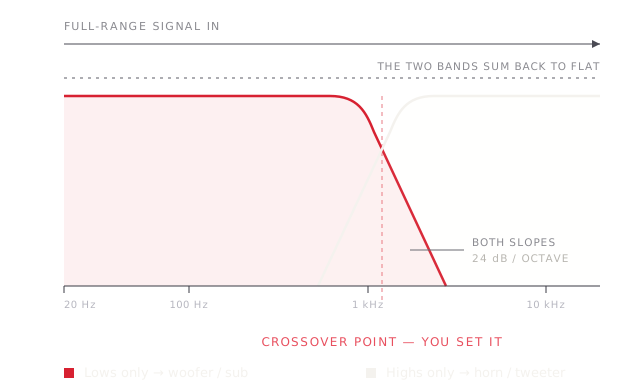
You've probably heard you need one, but here's why. Think of it as a frequency splitter. No single driver reproduces the full frequency range well — a woofer is built for lows, a tweeter for highs, a horn for the mids and highs it's voiced to. A crossover splits the incoming signal and routes each band only to the driver designed to handle it, so nothing works outside its comfort zone. The payoff: cleaner output, more usable headroom, and drivers that aren't straining against something they were never built for.

A full-range signal entering a crossover and splitting into a low-frequency band routed to the woofer and a high-frequency band routed to the horn, the two 24 dB per octave slopes crossing at the crossover point
One signal in, two bands out. Everything below the point you choose goes to the woofer, everything above it to the horn — each rolling off at 24 dB per octave, the dbx standard.